Shopping Cart

Your cart is currently empty.

Are Your Filters HAZARDOUS?

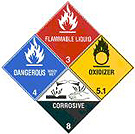
Waste SymbolsJust as you would in your house, your paint booth filters must be changed to protect the quality of air you breathe and the environment. For the health of painters, spray-painting operations must use paint booths with exhaust filters. Exhaust filters are designed to collect paint and other particles, preventing them from polluting the air outside the shop with paint overspray. Because the paint being collected on the filters can be hazardous, it can also make the used filter potentially hazardous.  So how do you know if your booth filters are considered hazardous waste?

1.)   Evaluate Your Filters. No matter which type of exhaust filter you use, all types must be evaluated to determine whether or not they are hazardous. Avoid conditions that could lead to spontaneous combustion in dumpsters. Both hazardous and non-hazardous filters have been known to spontaneously combust.

2.)   How Can You Determine Hazardous Filters? Determining a hazardous filter can be done in two ways.

a.)   Through knowledge of waste

-Only use paints and coatings which contain regulated metals.

b.)   Use of laboratory testing

-Arrange a testing with a company capable of performing TCLP (Toxicity Characteristic Leaching Procedure) test.

Get more information on paint booths, filters and environmental concerns from the Environmental Protection Agency.

If your filters are hazardous, you must store them in a non-leaking container marked with the words “Hazardous Waste” with the waste description attached. To select the proper container you may want to contact the disposal facility you are planning to use. A licensed hazardous waste transporter is required to ship the hazardous waste to the disposal facility. A special paper called a hazardous waste manifest must be accompanied with the shipment.

Non-hazardous filters cannot be disposed of in or with your normal trash. Your waste is to be sent to a permitted landfill or burner by a waste hauler. Make sure filters and the paints they contain are completely dry prior to disposal to minimize the chance of fire.

In North Carolina, if the paint on the filters is DRY then it is not considered Hazardous. If the paint is WET, then it is Hazardous. Consult with your jobber, filter supplier, and/or your local authorities for assistance in properly characterizing and handling your waste filters.

Manufactured vs. Homemade Paint Booths

A homemade paint spray booth

We all love a handyman, a professional who can fix anything. And not just any handyman, we want the best handyman. When our pipes burst, we call the plumber. When our cars break down, we call the mechanic. So why would you try to make a homemade paint booth?

Whenever you are dealing with highly volatile products such as paint and chemicals there is the possibility of fire or the risk of an explosion. This is why homemade paint booths are not quite the route to take. Of course they are cheaper, and that is exactly the quality you will get. Dealing with something as serious as mixing harmful chemicals, a topnotch manufactured paint booth is required to keep you safe. Homemade Booths rarely, if ever, meet NFPA 33 and OSHA codes.

Many homemade paint booths have no ventilation system. A paint booth is essentially a sealed area with a powerful fan or air circulation unit installed in it. Your circulation unit should be powerful enough to circulate all the air in the room every five minutes to prevent the buildup of fumes. Both the inflow and the outflow vents should be equipped with air filters. A non-ventilated paint booth may be decent for painting small objects such as a dice; however, when painting big projects like car parts, your breathing is in trouble.

Manufactured paint booth systems are more pleasant, less likely to cause painting problems and a whole lot less likely to blow you to Kingdom Come! The technology is available to keep you alive. At Standard Tools, your safety is number one on our list. Our booths are quality to keep you safe and will not damage your pockets. Everyone wants to have quality and save money at the same time. Let Standard Tools do that for you.

A Paint Mixing Room is a Dangerous Place to Be

There are always “do’s and don’ts”, whether it’s fashion, workplace etiquette, or paint mixing rooms. That’s right! There are “do’s and don’ts” to using paint mixing rooms. Paint mixing rooms can be very dangerous work areas because of the toxic, flammable and hazardous materials stored in it. Use safe precautions to ensure your health & safety.

Keep away from. Extreme care shall be taken by individuals mixing solvent-based paints to remove from all possible sources of ignition, such as matches, cigarette lighters, and steel buckles.

Avoid contact and wash your hands! Persons handling painting materials shall avoid contact of material with skin and eyes, and inhalation of mists or vapors. When painting materials are handled, care shall be exercised to wash hands before eating, drinking, smoking, or using toilets. No food or drink shall be allowed in the paint area.

Proper attire.Personnel shall wear nonskid, rubber-soled shoes or canvas boots over their shoes when working. It is also a good idea to wear a Paint Suit to protect your clothes, skin and hair.

Illness. Workers with a history of chronic skin diseases, allergies, or asthma shall not be permitted to work with paint compounds and thinners.

Always remember skin contact, eye contact, ingestion, and breathing mists or vapors in excess of the threshold limit value, (TLV) a level of chemical substance to which it is believed a worker can be exposed day after day for a working lifetime without adverse health effects, shall be avoided. Follow these guidelines when working in a paint mixing room, and your well-being will be protected.

Ventilation and Exhaust Systems: A Guide to Protecting Your Breathing

Today we are all more aware of pollutants and what they do to our environment and our health. We know that pollution is not good for our breathing, so we have been taught how to take precautions, such as buying electric hybrid cars and going green. You should also be taught how to take precautions to protect your breathing in your paint booth.

Paint booths are extremely important in providing an optimal environment in which to spray paint. Solvent based spray paints are the main source of isocyanate (a harmful compound) and are damaging to human health. If you don’t take special precautions, you may end up with Asthma, persistent coughs or something more threatening.

Paint booths protect the health of your shop employees by filtering the paint overspray and fumes through the booth’s ventilation system. Three popular styles of booth include the down draft, cross draft and open front.

Open face paint booths have three walls while the front end is left open, and this is where the air is pulled in from. It is extracted by the paint booth exhaust fans which are located at the back.

A cross draft paint booth pulls filtered air in through filtered doors, and paint booth exhaust fans at the other end extract the contaminated air. These paint booths will have filters on both the intake and outtake side, so the incoming air is clean and free of contaminants to the work, while the outgoing air sends the toxic paint fumes our and away from the shop area.

A downdraft paint booth ventilation works by having multiple fans bringing fresh air in from top of the booth and exhaust fans at the bottom taking air out.

When looking to buy your paint booth, make sure that you understand the style of booth you will need for your given application. It is also important to buy from a reputable company that understands that ventilation and exhaust systems should meet the applicable requirements of NFPA 33. Some of the requirements are to make sure each booth has its own dedicated exhaust stack. Each exhaust plenum on a paint booth should have its own pressure gauge called a manometer.  Manufacturers’ should supply the manometer with the purchased paint booth package. Keeping the fan clean also helps to extend its life.

Sign up to our newsletter & Receive Savings In Your Inbox

Sign Up

Copyright © 2026 Standard Tools and Equipment Co.. | Ecommerce Shopping Cart Software by Miva, Inc.