Which air compressor is right for you?

Project2 (8155)For most shops, having an air compressor is a necessity. If you’re in the market for a compressor, make sure the air compressor you choose is the right one for your business and that it will meet all the requirements you need. With dozens of manufacturers to choose from, Tools USA only sells the most reputable and well-known brands. We stand by their products and they all have a 1-year parts warranty.

Whether you are going to use it occasionally or on a daily basis, there are several factors to consider. Tank size, configuration, horsepower and required CFM’s are important to think about.

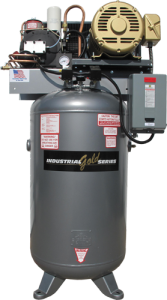
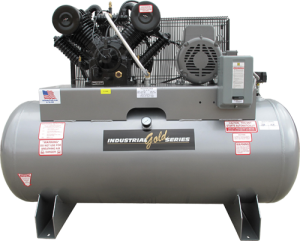
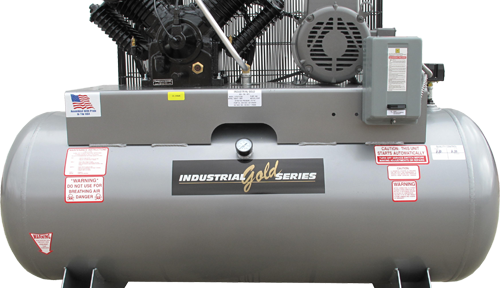
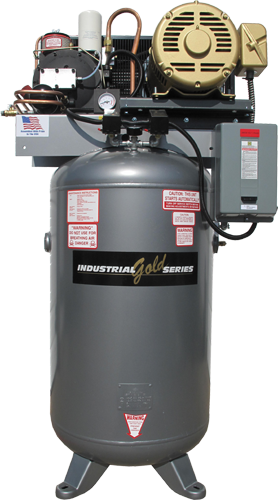
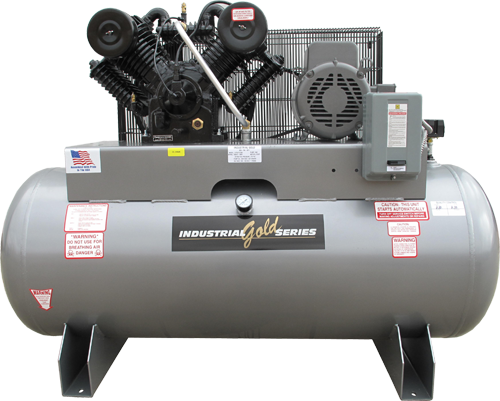
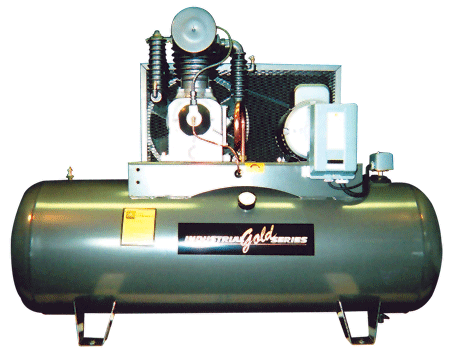
Should you choose a vertical or horizontal unit? The configuration of the air compressor is important. Air compressor tanks vary widely in size, so it’s important to think about how you will be using it to determine the size you’ll need. Tools that work in short bursts—an impact wrench, for example—work well with a small tank. Tools that continuously use air such as grinders, spray guns and sand blasters will require a larger tank. If you can’t decide, be safe and go with the one with the larger tank.

As tank size increases, so does the overall size of the compressor.  If you want a big tank but have space concerns, consider a vertical tank instead of a horizontal model. To conserve space, a vertical compressor can be a big bonus when compared to a horizontal unit.

How much power do you need? The CFM and PSI ratings indicate which tools a compressor can operate. Make sure the compressor can supply the amount of air and pressure for your tools. Select a compressor that exceeds the CFM requirement of your most powerful air tool. For example, air hammers, die grinders, drills and ratchets require 4.0 CFM and around 90 PSI. High-speed grinders require 8.0 CFM while sanders are around 6- 7.5 CFM.

Air compressor motors range from simple 110-volt, 1/2-horsepower jobs all the way up to three-phase, 220-240-volt with 25+ horsepower. The electrical service available to your shop dictates the largest compressor you can install. The electricity used in industrial settings is generally three-phase power.

Here are a couple links on how to size the compressors that we sell, manufactured by Industrial Gold:

Click here to download for our rotary screw compressors
Click here to download for our piston compressors

Once you have decided the right compressor for you, maintaining it is extremely important. Just like changing the oil in your car. Daily usage and vibration of compressors can cause the fittings and bolts to loosen and should be checked when your compressor is serviced. Here are some other preventative measures you should take:


Daily:
Drain moisture from the tank
Weekly:  Check the pump oil level and top off if necessary
Quarterly: Change oil and filter, check condition and alignment of belt, flywheel and motor pulley, check operation of the safety valve, check pressure switch unloader to ensure the compressor unloads when the motor shuts down and clean dirt and dust from the pump fins and motor.
Every 2,000 Hours: Lubricate electric motor, Inspect and replace (as necessary) the pump valves, check valves, safety valves, pressure gauge, and belt(s).

Why is Industrial Gold one of the manufacturers we choose to offer our clients? We like that they are family-owned and operated since 1996 and they build all of their products with same level of pride and commitment that they started their business with. They make the simplest to operate, easiest to maintain and most reliable compressors on the market today. Simply put, they make a quality compressor at a great price and Tools USA is happy to offer the full line to our customers.

What Does Your Parking Lot Look Like?

car lotWinter is over and the cars damaged due to icy and snowy driving may have your parking lot in overflow mode.  People are ready to have their vehicles repaired and get ready for the nice cruising weather ahead. When there is plenty of work coming your way, you may think you don’t have time for anything else…. but now is the precise time when you should be investing in your shop for even more work down the road.

Ask yourself these checklist questions to make sure your shop is in optimal working mode:

  1. Is your frame machine working well, or will it hamper the work to be done?
  2. How about the hydraulics and clamping devices?
  3. Is your spray booth clean and efficient?
  4. Are you painting without a booth?
  5. Do you need another spray booth?
  6. How about smaller items like air compressors, mixing rooms, pulling chains, measuring tools and sanding equipment?

The best time to invest in your shop is when it you have plenty of work and cash flow coming through the door.  Make plans to improve the productivity and quality of your work NOW, when you don’t need to get a loan or settle for cheaper equipment.

Improving your shop when your competitor down the street doesn’t has a long-lasting impact on the profitability and survivability of your shop. We want to see you busy and in business for a long time to come. Let us help you today.

Visit our sites: Eagle Equipment, Tools USA, Paint-Booths.com.

It’s Fix-a-Dent Season!

Car-in-ditchVehicular accidents increase in the winter.  Snow and ice make driving tricky.   Holiday shopping and travel mean extra miles.  Shorter days mean more nighttime driving.   Body shops get busy, and Standard Tools sells more collision repair equipment, including frame pulling systems.  It might help to know your options before you start shopping.

Portable pulling systems are useful as mobile devices for spot-work.  They work by pulling one part of the car against another and can only be used for small jobs, unless a user really is an artist at this kind of work.

Pulling posts are used with anchor pots in the shop floor.  This process dates to the 1920’s and is still used by some shops.  The systems are very robust but can be slow to operate.  Pulls are generally simple and uni-directional.

The Dozer is a rolling main tube with a pivoting vertical tube that pulls a secured chain.  This equipment is very useful on straight pulls on the side or end of a vehicle.  The vertical post rotates for more adjusting, but complex or pulls at an angle to the vehicle must be done in stages.

Our Floor System is a full system with four clamping stands and a rolling vertical pulling post.   The bed is made of six heavy-duty sections that anchor to the shop floor to create a machine bed that is larger than some frame machines.  The system comes with one rolling round pulling tower, but Standard Tools can provide a second tower.  This system is useful for other repair tasks and only sits 4.5” above the floor when not in use.

Standard Tools offers three different frame machines.   The 3003-17 is our entry-level machine that comes ready for any job.  It comes with two 10-ton square towers, four clamp stands and an infinite range of tower locations.  This machine is easy to use and should perform well on most autos and light trucks.  The 3002-18T and 3002-20T frame machines are heavy-duty frame machines designed to repair auto and most pickup trucks.  Rounds towers allow pulls at an angle to the bed, and the ½” bed thickness provides a stable pulling platform.  All three frame machines are tilt-style to allow easy loading of most vehicles.  All three machines work with a wide range of measuring equipment and machine accessories.

If your body shop parking lot is filling with collision work or if it just time to replace a tired frame machine, give us a call.  Our website has plenty of photos and videos to show the quality and features of our systems.  Standard Tools started in business in 1979 supplying collision repair equipment and continues to supply real value to shops who profit by repairing all types of collision damage.


Sure, you can go with the cheapest deal you find online.

Frame Machine, Chassis Machine, Frame Straightener or whatever you want to call them!  In recent years, frame machine choices, prices and quality have changed immensely due to the ever-growing Internet.

The Internet has changed the frame machine market, with one- and two-man operations giving the impression that they are bigger than they are. They want the customer to think that they are viable, multi-location, well-staffed companies.  How can you tell when you’re shopping online, anyway?

With lower-priced import machines flooding the market, who you purchase from is as important, if not more, than what you buy.  You need to research the company that you are planning to purchase from to find out how long the company has been in business, how many employees they have, what type of facility they are operating from, and what level of customer service you can expect.

Sure, you can go with the cheapest deal you find online. But what you will get is very poor quality from an unreliable company. These companies don’t last long, and when they shut down how will you find replacement parts, contact customer service or get product support?

Remember the golden rule, you get what you pay for! Pay the little bit more to get a good machine from a quality company that will stand the test of time in your shop.

Tools USA has been a leader in the industry since 1979, you can trust that we will sell you a quality machine and be here for the many years that it will last you! Read More about Us!

Measuring; Before & After

Allvis in UseCollision repair shops both large and small need accurate measuring capabilities in order to return a customer’s vehicle to pre-crash condition.

The Allvis Computerized Measuring System offers simple, technician-friendly measuring with the capability to print before and after repair reports.The system saves the work orders as JPEG files, making it easy to pull them up in the future. At a price that is affordable to the smaller shop and attractive to the large multi-tech shop, this system offers you a simple, speedy operation.

With the Allvis System shops can meet the print out requirements of many insurance companies to qualify for DRP status, without the $35000 investment.  The Allvis Systems are the most practical , technician friendly systems available.  Any technician regardless of experience can measure, register and print using the Allvis systems.

Buy Before January 1st to Save Thousands.

It’s December already, can you believe it? Where does a year go? With the year coming to a close, you may hear a lot about “Section 179” and how you’re business can benefit if you are looking to purchase some equipment before 2013.

We get just as confused as the next guy when you start talking “tax rate”, “deductions” and “depreciation”. We thought we would do a little research and try to explain how this could be a HUGE benefit to small businesses.

When we say ‘equipment’, we mean any large purchase you buy to benefit your business. Some examples: a paint booth to help your productivity, a car lift to increase your repair business or a frame machine for the busy winter months. If your business needs it to increase business and it’s an ‘investment’, it is most likely included in this category.

You can even finance it in 2013, but write it off in 2012 and save thousands.

So, section179 is what exactly? It’s an incentive created by the U.S. government to encourage businesses to buy equipment and invest in themselves. Essentially, Section 179 of the IRS tax code allows businesses to deduct the full purchase price of qualifying equipment purchased (or financed) during the tax year. Wow! The FULL PURCHASE PRICE will be deducted from your gross income. (As long as the total purchase price is less than 139,000.) Continue reading

Are Your Filters HAZARDOUS?

Just as you would in your house, your paint booth filters must be changed to protect the quality of air you breathe and the environment. For the health of painters, spray-painting operations must use paint booths with exhaust filters. Exhaust filters are designed to collect paint and other particles, preventing them from polluting the air outside the shop with paint overspray. Because the paint being collected on the filters can be hazardous, it can also make the used filter potentially hazardous.  So how do you know if your booth filters are considered hazardous waste?

1.)   Evaluate Your Filters. No matter which type of exhaust filter you use, all types must be evaluated to determine whether or not they are hazardous. Avoid conditions that could lead to spontaneous combustion in dumpsters. Both hazardous and non-hazardous filters have been known to spontaneously combust.

2.)   How Can You Determine Hazardous Filters? Determining a hazardous filter can be done in two ways.

a.)   Through knowledge of waste

-Only use paints and coatings which contain regulated metals.

b.)   Use of laboratory testing

-Arrange a testing with a company capable of performing TCLP (Toxicity Characteristic Leaching Procedure) test.

Get more information on paint booths, filters and environmental concerns from the Environmental Protection Agency.

If your filters are hazardous, you must store them in a non-leaking container marked with the words “Hazardous Waste” with the waste description attached. To select the proper container you may want to contact the disposal facility you are planning to use. A licensed hazardous waste transporter is required to ship the hazardous waste to the disposal facility. A special paper called a hazardous waste manifest must be accompanied with the shipment.

Non-hazardous filters cannot be disposed of in or with your normal trash. Your waste is to be sent to a permitted landfill or burner by a waste hauler. Make sure filters and the paints they contain are completely dry prior to disposal to minimize the chance of fire.

In North Carolina, if the paint on the filters is DRY then it is not considered Hazardous. If the paint is WET, then it is Hazardous. Consult with your jobber, filter supplier, and/or your local authorities for assistance in properly characterizing and handling your waste filters.

Manufactured vs. Homemade Paint Booths

We all love a handyman, a professional who can fix anything. And not just any handyman, we want the best handyman. When our pipes burst, we call the plumber. When our cars break down, we call the mechanic. So why would you try to make a homemade paint booth?

Whenever you are dealing with highly volatile products such as paint and chemicals there is the possibility of fire or the risk of an explosion. This is why homemade paint booths are not quite the route to take. Of course they are cheaper, and that is exactly the quality you will get. Dealing with something as serious as mixing harmful chemicals, a topnotch manufactured paint booth is required to keep you safe. Homemade Booths rarely, if ever, meet NFPA 33 and OSHA codes.

Many homemade paint booths have no ventilation system. A paint booth is essentially a sealed area with a powerful fan or air circulation unit installed in it. Your circulation unit should be powerful enough to circulate all the air in the room every five minutes to prevent the buildup of fumes. Both the inflow and the outflow vents should be equipped with air filters. A non-ventilated paint booth may be decent for painting small objects such as a dice; however, when painting big projects like car parts, your breathing is in trouble.

Manufactured paint booth systems are more pleasant, less likely to cause painting problems and a whole lot less likely to blow you to Kingdom Come! The technology is available to keep you alive. At Standard Tools, your safety is number one on our list. Our booths are quality to keep you safe and will not damage your pockets. Everyone wants to have quality and save money at the same time. Let Standard Tools do that for you.

A Paint Mixing Room is a Dangerous Place to Be

There are always “do’s and don’ts”, whether it’s fashion, workplace etiquette, or paint mixing rooms. That’s right! There are “do’s and don’ts” to using paint mixing rooms. Paint mixing rooms can be very dangerous work areas because of the toxic, flammable and hazardous materials stored in it. Use safe precautions to ensure your health & safety.

Keep away from. Extreme care shall be taken by individuals mixing solvent-based paints to remove from all possible sources of ignition, such as matches, cigarette lighters, and steel buckles.

Avoid contact and wash your hands! Persons handling painting materials shall avoid contact of material with skin and eyes, and inhalation of mists or vapors. When painting materials are handled, care shall be exercised to wash hands before eating, drinking, smoking, or using toilets. No food or drink shall be allowed in the paint area.

Proper attire.Personnel shall wear nonskid, rubber-soled shoes or canvas boots over their shoes when working. It is also a good idea to wear a Paint Suit to protect your clothes, skin and hair.

Illness. Workers with a history of chronic skin diseases, allergies, or asthma shall not be permitted to work with paint compounds and thinners.

Always remember skin contact, eye contact, ingestion, and breathing mists or vapors in excess of the threshold limit value, (TLV) a level of chemical substance to which it is believed a worker can be exposed day after day for a working lifetime without adverse health effects, shall be avoided. Follow these guidelines when working in a paint mixing room, and your well-being will be protected.

Ventilation and Exhaust Systems: A Guide to Protecting Your Breathing

Today we are all more aware of pollutants and what they do to our environment and our health. We know that pollution is not good for our breathing, so we have been taught how to take precautions, such as buying electric hybrid cars and going green. You should also be taught how to take precautions to protect your breathing in your paint booth.

Paint booths are extremely important in providing an optimal environment in which to spray paint. Solvent based spray paints are the main source of isocyanate (a harmful compound) and are damaging to human health. If you don’t take special precautions, you may end up with Asthma, persistent coughs or something more threatening.

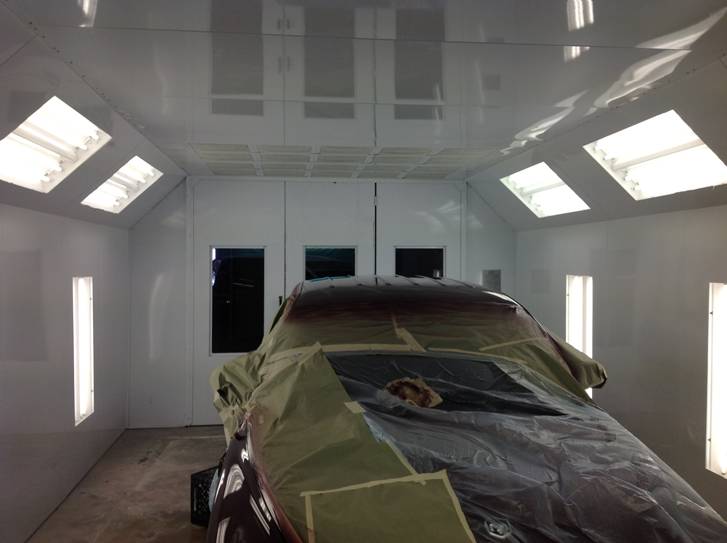
Paint booths protect the health of your shop employees by filtering the paint overspray and fumes through the booth’s ventilation system. Three popular styles of booth include the down draft, cross draft and open front.

Open front booths have three walls while the front end is left open, and this is where the air is pulled in from. It is extracted by the paint booth exhaust fans which are located at the back.

A cross draft paint booth pulls filtered air in through filtered doors, and paint booth exhaust fans at the other end extract the contaminated air. These paint booths will have filters on both the intake and outtake side, so the incoming air is clean and free of contaminants to the work, while the outgoing air sends the toxic paint fumes our and away from the shop area.

A down draft paint booth ventilation works by having multiple fans bringing fresh air in from top of the booth and exhaust fans at the bottom taking air out.

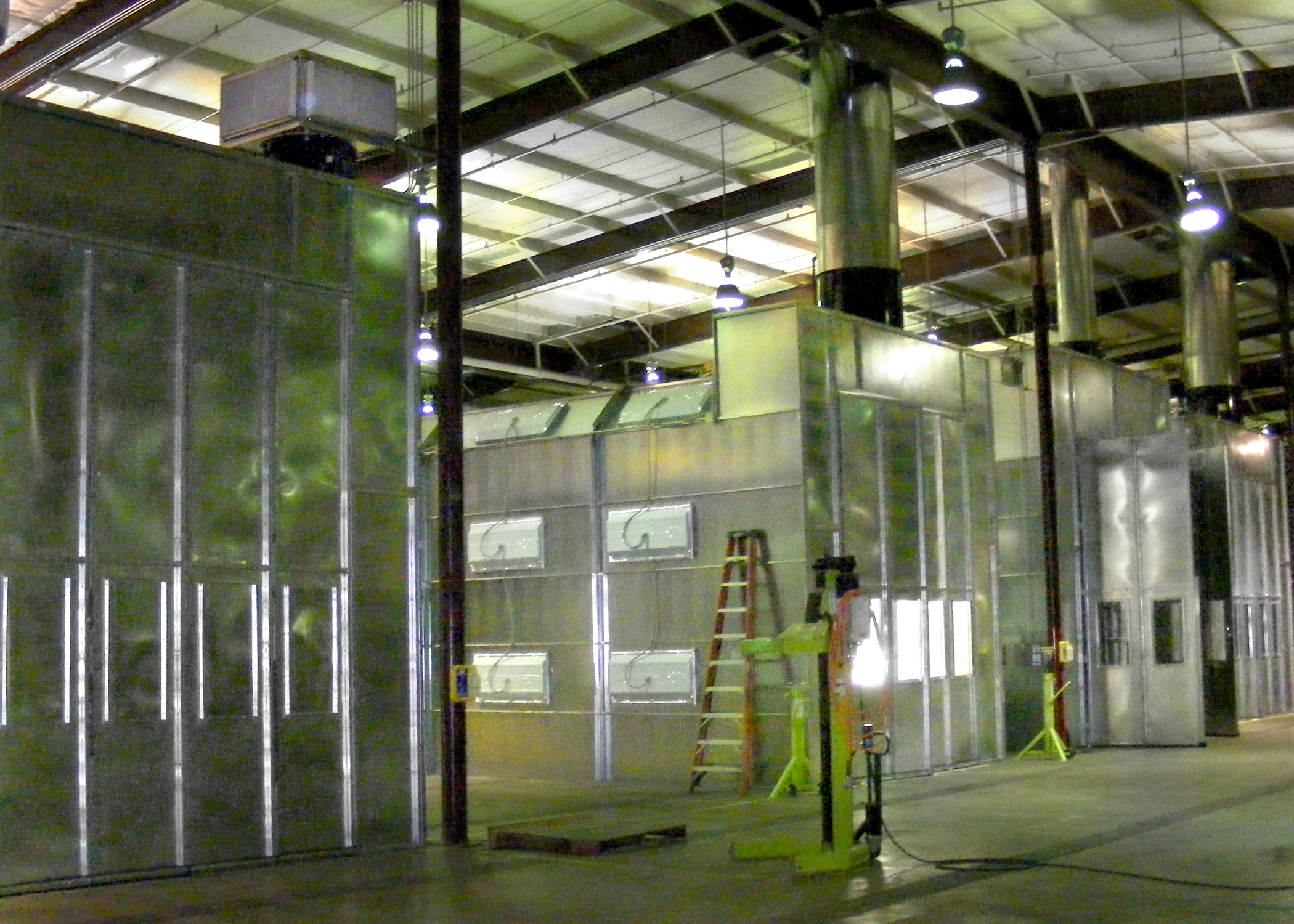
When looking to buy your paint booth, make sure that you understand the style of booth you will need for your given application. It is also important to buy from a reputable company that understands that ventilation and exhaust systems should meet the applicable requirements of NFPA 33. Some of the requirements are to make sure each booth has its own dedicated exhaust stack. Each exhaust plenum on a paint booth should have its own pressure gauge called a manometer.  Manufacturers’ should supply the manometer with the purchased paint booth package. Keeping the fan clean also helps to extend its life.